


Nomerix: License Plates
3.74.00 Reviews
App Specs
- Version
- 3.2.2
- Updated On
- License
- Free
- Downloads
- 100,000+
- Developer
- Mitrofan Games
- Categories
- Casual
- Platform
- Android
Screenshots
 Analysis by AppCompare
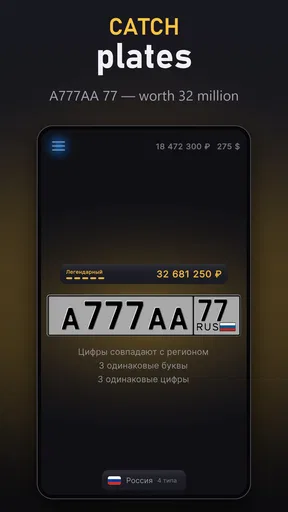
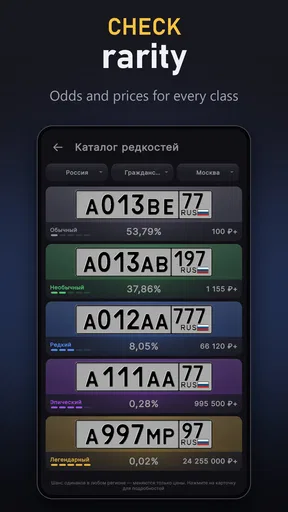
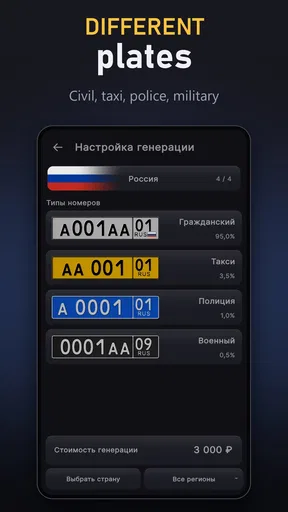
I went into Nomerix: License Plates expecting a tiny game with a very particular hook, and that is exactly where its appeal lies. You tap to produce Russian-style license plates, then look out for numbers that feel rare or special. There is no elaborate premise to learn before playing: the pleasure comes from the next result, the quick check of what appeared, and the small hope that this tap will be the memorable one.
That simple loop makes it easy to pick up in a spare moment. It also puts the game’s limitations right on the surface. If you enjoy collecting unusual number combinations or find repetition oddly satisfying, it can be a pleasant little time-killer. If you need a story, varied challenges, or meaningful decisions from a casual game, the basic idea may wear thin quickly.
How the plate hunt plays out
I find the appeal of the plate hunt depends on giving each result a moment of attention rather than tapping on autopilot. That makes it easy to shape a short session around your own curiosity: decide what kinds of number patterns catch your eye, then see whether the next plate fits. From there, the key question is what makes a result feel rewarding enough to keep the loop going.
A tap, then a quick inspection
The first action is refreshingly clear: tap to generate a plate. The result gives you something specific to inspect rather than asking you to steer a character, manage a board, or learn a complicated control scheme. I like that directness. It makes the game understandable almost immediately, including for someone who does not usually play mobile games.
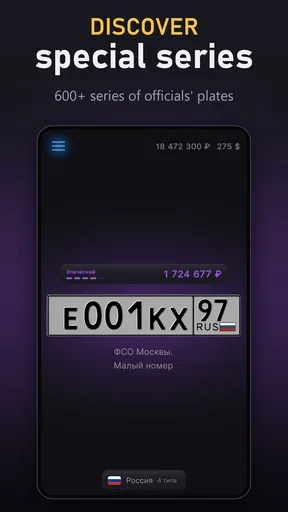
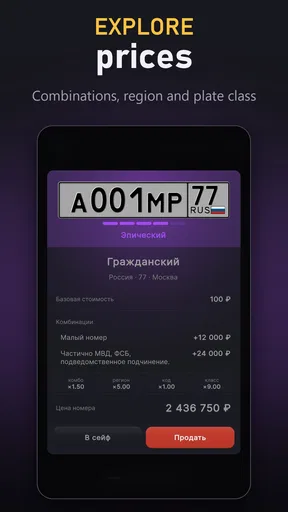
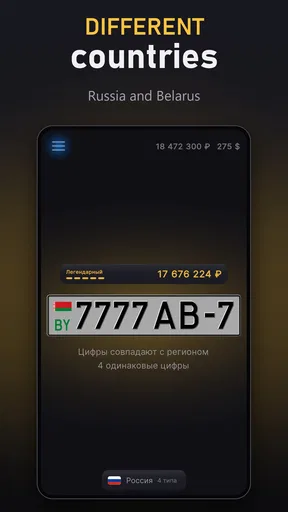
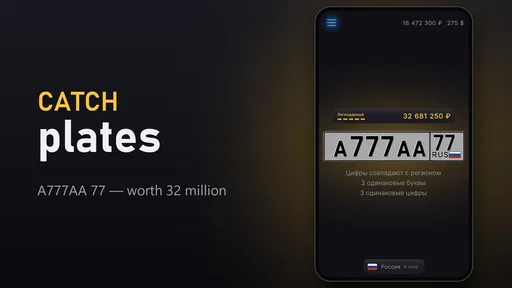
The Russian plate theme is more than a generic number generator. It gives the results a recognizable identity, and the search for a VIP number turns each new plate into a small “is this the one?” moment. The fun depends on noticing the number and deciding whether it feels special enough to count as a find. That makes attention part of the activity, even though the actual input is simple.
A useful way to approach it is to decide what you personally consider interesting before you start tapping. You might be drawn to repeated digits, a neat sequence, or a combination that looks unusual to you. Treating the hunt as a personal spotting game gives each result more texture than tapping without looking. It does not change the mechanics; it simply makes the inspection stage more engaging.
This is a casual game from Mitrofan Games, and its compact premise suits short breaks better than a long, focused play session. I can imagine opening it while waiting for a friend or taking a brief pause between tasks. There is no need to remember a plot or rebuild a complicated strategy after closing it. You can return, generate another plate, and get straight back to the point.
Worth Reading Before You Choose

Baby Panda World Brings Quick Play to Modern Phones, but Its Game Library Feels Busy

ESPN’s Live Game View Makes Following Close Games Easier

QuizzLand Review: A Good Fit for Short Trivia Breaks, Not Every Player

Basketball Stars: Multiplayer Is Fast, but Can It Recover When Matches Go Wrong?

WEBTOON Turns Phone Updates Into a Better Reading Routine

Link to Windows Runs on Shared Habits, Not Social Feeds
The rhythm: generate, check, repeat
The feedback arrives in a steady pattern: tap, see a result, inspect it, then choose whether to go again. That cycle is easy to understand, but its pace is also the main design trade-off. A player who enjoys the suspense of repeated draws may find the rhythm soothing. Someone who expects every tap to trigger a new kind of challenge may experience it as repetitive instead.
For me, the inspection step is what keeps the loop from becoming completely mindless. If I look closely at each plate, I can make the hunt about recognition rather than raw volume. If I tap rapidly without paying attention, the game has much less to offer. In other words, slowing down can improve the experience: the point is not just to produce results, but to notice whether one stands out.
That also makes it better suited to casual dipping than to multitasking that demands attention. A quick session works when you can glance at each plate and enjoy the reveal. If you are trying to follow a conversation or concentrate on another task at the same time, the little moment of inspection is easy to miss, leaving only the repeated tapping.
The loop does not ask for elaborate planning, so it is approachable for younger players and anyone seeking a low-pressure distraction. Its content rating is Everyone, which fits that broadly accessible feel. Still, simple controls should not be confused with universal appeal: the game’s particular pleasure is in number-spotting, and players who do not care about patterns or rare-looking combinations may have little reason to keep going.
What makes a result feel rewarding
The reward is the possibility of seeing a plate that catches your eye. This is a small, self-contained payoff, not the kind of progress that comes from building a character or completing a long campaign. That distinction matters when choosing it. I would recommend it to someone who likes the anticipation of a fresh result and can enjoy a find for its own sake, rather than someone looking for substantial progression.
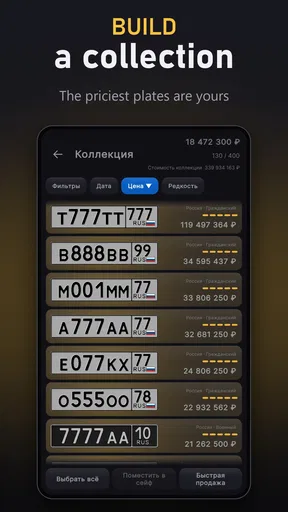
A practical tip is to make your own informal “best so far” standard. When a plate looks especially striking, pause long enough to appreciate why: perhaps the digits seem orderly, repetitive, or simply memorable. That tiny mental comparison can create a thread across a session without pretending the game offers a deeper collection system. It also gives you a reason to inspect rather than immediately tapping again.
The trade-off is that a hunt built around rare results can feel uneven. Several ordinary-looking plates in a row may make the next tap feel tempting, but they can also make the activity feel like waiting rather than playing. I would keep sessions brief and stop when the search starts to feel automatic. The game is strongest as a quick curiosity, not as a task that needs to be completed.
There is a social use for that same quirk: you can show someone a result and ask whether they think it looks unusual. That turns the hunt into a tiny shared guessing game without requiring a multiplayer mode or any special setup. It is a good fit for a casual moment with a friend who enjoys patterns, though it will not replace a game designed around direct competition or shared objectives.
Why another session begins—and when it should end
After a result, the reset is immediate in spirit: the next tap starts another search. That is the reason another session can begin so easily. You do not need to clear a level or wait for a new chapter; the possibility of a more interesting plate is enough to invite one more try. For a few minutes, that open-ended structure can feel pleasantly effortless.
It can also blur the stopping point. Since there is no obvious narrative endpoint in the core idea, it is sensible to set your own limit before you begin: a short break, a few minutes, or simply until the novelty fades. This is not a criticism unique to this game; it is a direct consequence of a loop whose next reward is another generated result. I find it works best when I choose the length of the session rather than expecting the game to tell me when I am done.
Compared with the usual casual alternatives—such as a match-based puzzle or a quick arcade challenge—this is less about solving a changing problem and more about anticipation and recognition. A puzzle is usually the better pick if you want decisions that alter the outcome. A fast action game is better if you want movement and escalating pressure. This one makes sense when you want a low-effort number hunt that can be paused at any moment.
That comparison is also a useful filter for deciding whether to install it. Choose it if the Russian plate format interests you, you like searching for rare-looking combinations, or you want something that requires almost no warm-up. Skip it if repeated draws frustrate you, if you need clear objectives, or if you want each round to introduce a new mechanic. Its narrow focus is both its identity and its ceiling.
A small game with a clear audience
Nomerix: License Plates is free, and its easy entry makes it simple to try without treating the download as a commitment. It has been available since September 19, 2018, and its current version is 3.2.2. The game has a 3.7 average from 762 ratings, alongside four written reviews, and has passed 100K installs. Those figures suggest a modest audience and give useful context, but they do not change the more important question: do you enjoy the plate-spotting loop itself?
For a technical compatibility check, the listed minimum operating system is 7.1. If your device meets that requirement, the main decision is less about capability than taste. I would not choose this over a richer casual game when I want variety, goals, or a sense of mastery. I would choose it when I want a lightweight distraction and the possibility of spotting a number combination that feels worth remembering.
My verdict is that this is a focused little diversion rather than an all-purpose mobile game. The action is immediate, the feedback is easy to read, and the reward is the chance of finding an appealing VIP number. Its repeat-and-reset rhythm can be satisfying in short bursts, but it has limited depth if you keep playing after the novelty wears off. If that simple hunt sounds enjoyable, it is worth a try; if you need a changing challenge, your time is better spent elsewhere.
Pros
- Quickly identifies the region associated with a license plate.
- Useful for checking unfamiliar plates while traveling.
- Simple interface makes lookups easy to perform.
- Can help users learn about plate formats in different regions.
- Handy reference for trivia
- research
- or casual curiosity.
Cons
- Results may not cover every country or plate format.
- Some plate designs can be difficult to recognize accurately.
- Regional rules and formats may change over time.
- It does not verify a vehicle's ownership or legal status.
- Lookup usefulness depends on the app's available plate database.
FAQs for Nomerix: License Plates
What is Nomerix: License Plates?
Nomerix: License Plates is a mobile app focused on license plates. Its exact features may vary by version and platform, so check the app listing and screenshots before downloading to confirm what is currently included. The name alone does not establish whether it offers plate recognition, a reference database, tracking tools, or another kind of plate-related service.
Is Nomerix: License Plates available for Android and iOS?
Availability can differ by country, device, and release date. Search for “Nomerix: License Plates” in the Google Play Store or Apple App Store on your device, and confirm the developer name and app details before installing. If it does not appear in your store, it may not be available in your region or compatible with your operating system version.
Does Nomerix: License Plates identify a vehicle from its license plate?
Do not assume the app can identify a vehicle or retrieve information about its owner just from its title. Capabilities depend on the current version, the app’s data sources, and local rules. Review the feature description and permissions in the official store listing, and avoid relying on any result for legal, safety, or investigative decisions unless the app clearly explains its limits.
Is Nomerix: License Plates free to download and use?
The price and payment model may change, so check the official store listing before installing. An app can be free to download while offering subscriptions, in-app purchases, or paid features. Review the purchase details, trial terms, and renewal conditions shown by Google Play or the App Store, and confirm whether any feature you want requires payment.
What privacy permissions or personal information might Nomerix: License Plates require?
Permissions depend on how the current version works and which features you use. Before granting access to the camera, photos, location, or other device data, read the permission prompts and the developer’s privacy information in the store listing. Grant only access that makes sense for a feature you intend to use, and review the policy for details on data collection, storage, and sharing.


